For years, there has been an ongoing misconception that fluoride could be harmful to you. The truth is, when used in age appropriate amounts, fluoride is an inexpensive way to reduce cavities in not only children, but for people of all ages. The American Academy of Pediatric Dentistry Guidelines on Fluoride Therapy affirms fluoride’s significant role in the decline of dental caries in the United States.
What types of fluoride are there?
1.) Topical fluoride can come in the form of gel, foam, or toothpaste and help strengthen teeth already present in the mouth, making them more resistant to decay.
Professionally applied fluoride treatments are MOST EFFECTIVE in reducing the frequency of cavity diagnosis and children should receive a professional fluoride treatment at least every 6 months.
– When teeth are cleaned with prophylaxis paste at the dentist, the outermost layer of hardened enamel is
removed.
– An application of fluoride varnish at this appointment restores this hardness.
2.) Systemic fluoride is ingested in the foods and drinks we consume and become incorporated into developing tooth structures.
Community water fluoridation is the process of regulating the fluoride content to the recommended level for optimal dental health. Studies show that water fluoridation continues reduce tooth decay by more than 25%. According to the Centers for Disease Control and Prevention, water fluoridation is considered one of the 10 greatest public health achievements in the 20th Century.
When should children start using a toothpaste with fluoride? How much should be applied?
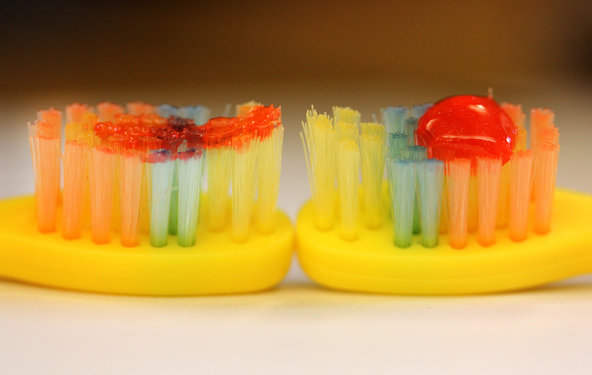
– After your child’s first birthday, the AAPD recommends a rice sized smear of toothpaste at each brushing.
(This amount should be used under the age of 3.)
– For children ages 3 to 6 years old, a small pea size amount should be used.
(Keep in mind that a parent should always keep toothpaste out of reach of small child to ensure they
do not ingest more than the recommended amount.)
If your child has braces, it automatically places them at a higher risk for getting cavities. We may prescribe a fluoridated toothpaste of higher concentration to give every extra effort for protection that we can.